BirdNote
Feather identification: how to identify bird feathers
Found a feather on a walk and wondered which bird dropped it? Feather identification is a fun, detective-like skill. By reading a feather's type, shape, size, colour and pattern, you can often narrow it down to a species — or at least a family. Here's how.
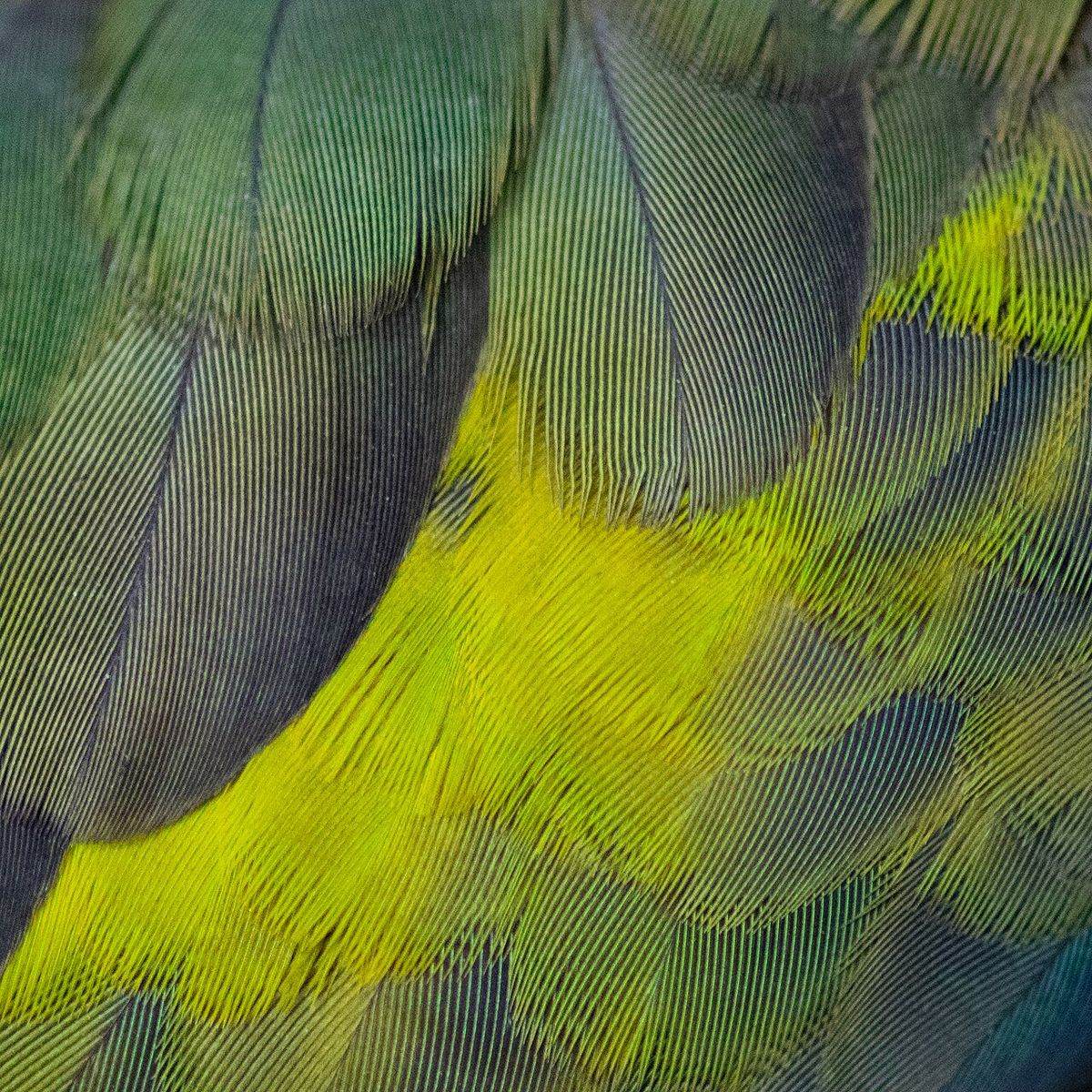
Feathers carry a surprising amount of identifying detail. Photo via Wikimedia Commons (CC).
The main types of feather
Knowing which kind of feather you've found is the first big clue, because each type comes from a different part of the bird and has a different shape.
- Flight feathers (primaries & secondaries) — long, stiff feathers from the wing, usually asymmetrical with a narrow leading edge. Great for identification because they're often patterned.
- Tail feathers (rectrices) — also long and stiff, but more symmetrical. Central tail feathers are the most even; outer ones curve.
- Contour feathers — the smaller body feathers that give a bird its shape and main colours.
- Down feathers — soft, fluffy, and insulating, found close to the body. Rarely identifiable to species.
5 steps to identify a feather
- Identify the feather type. Flight, tail, contour, or down? (See above.)
- Measure it. Length and width instantly rule out many species. A 30 cm feather isn't from a sparrow.
- Note the shape. Rounded, pointed, or notched tip? Symmetrical or lopsided vane?
- Study colour and pattern. Bars, spots, iridescence, or a single solid colour?
- Match it. Compare with a guide, an online feather atlas, or photograph the bird you suspect and confirm with the BirdNote app.
Not sure which bird it is?
Spot the bird itself? Identify it by photo or song in seconds with BirdNote.

Reading shape and size
Size is the fastest filter in bird feather identification. Roughly:
- Under 5 cm — small songbirds (sparrows, tits, finches, robins).
- 5–12 cm — medium birds (blackbirds, thrushes, starlings, jays).
- 12–25 cm — pigeons, crows, ducks, gulls, smaller raptors.
- Over 25 cm — large birds of prey, geese, swans, herons.
Shape adds the next layer. Rounded wingtips often belong to woodland birds that need quick manoeuvring; long, pointed feathers belong to fast, open-country flyers. A deeply asymmetrical vane points to an outer primary from the wingtip.
Colour and pattern clues
Pattern is where feathers get exciting. Watch for:
- Barring — horizontal stripes, common in birds of prey, owls, and game birds.
- Spots and chevrons — seen in thrushes and some owls.
- Iridescence — the green-purple sheen of a magpie, starling, or mallard's wing patch (speculum).
- Bold blocks of colour — like the famous blue-and-black barred covert of a Eurasian Jay.
Hold the feather at different angles in good light — iridescence and subtle barring often only appear when the light catches them.
Common feathers and their owners
| If the feather is… | It may belong to… |
|---|---|
| Bright blue with black bars, small | Eurasian Jay (wing covert) |
| Iridescent green-purple, black, medium | Magpie or Starling |
| Barred brown and buff, soft-edged, large | An owl (soft edges = silent flight) |
| Brown with strong dark barring, large & stiff | A hawk or buzzard (birds of prey) |
| Grey with a glossy blue/green wing patch | Mallard (the speculum) |
| Small, plain brown, streaked | A sparrow or other small songbird |
A note on the law
In many countries it is illegal to collect or keep feathers from certain protected species — birds of prey, owls, and migratory birds in particular. In the United States, for example, the Migratory Bird Treaty Act protects the feathers of most native birds. Enjoy identifying feathers where they lie, photograph them, and check your local regulations before taking any home.
Frequently asked questions
How do I identify a feather I found?
Work through five clues in order: feather type, size, shape, colour and pattern. Then compare against a feather atlas or guide. If you can find and photograph the bird itself, a photo identifier app like BirdNote will confirm the species quickly.
Can an app identify a feather directly?
Feather-only identification is tricky for any app because many feathers look alike. The most reliable approach is to identify the bird — by photo or song — and work back to its feathers. BirdNote is built exactly for that.
What does an owl feather look like?
Owl feathers are usually soft and velvety with comb-like fringed edges that muffle sound for silent flight, and they're often barred in browns, buffs and greys.
Identify the bird, not just the feather
Snap a photo or record a song — BirdNote names the species free.