BirdNote
How to identify birds by sound: a beginner's guide
Most birds are heard long before they are seen. Learning to identify birds by sound is the single fastest way to know what's around you — and with a little practice (and the right app) anyone can do it. Here's how to start.
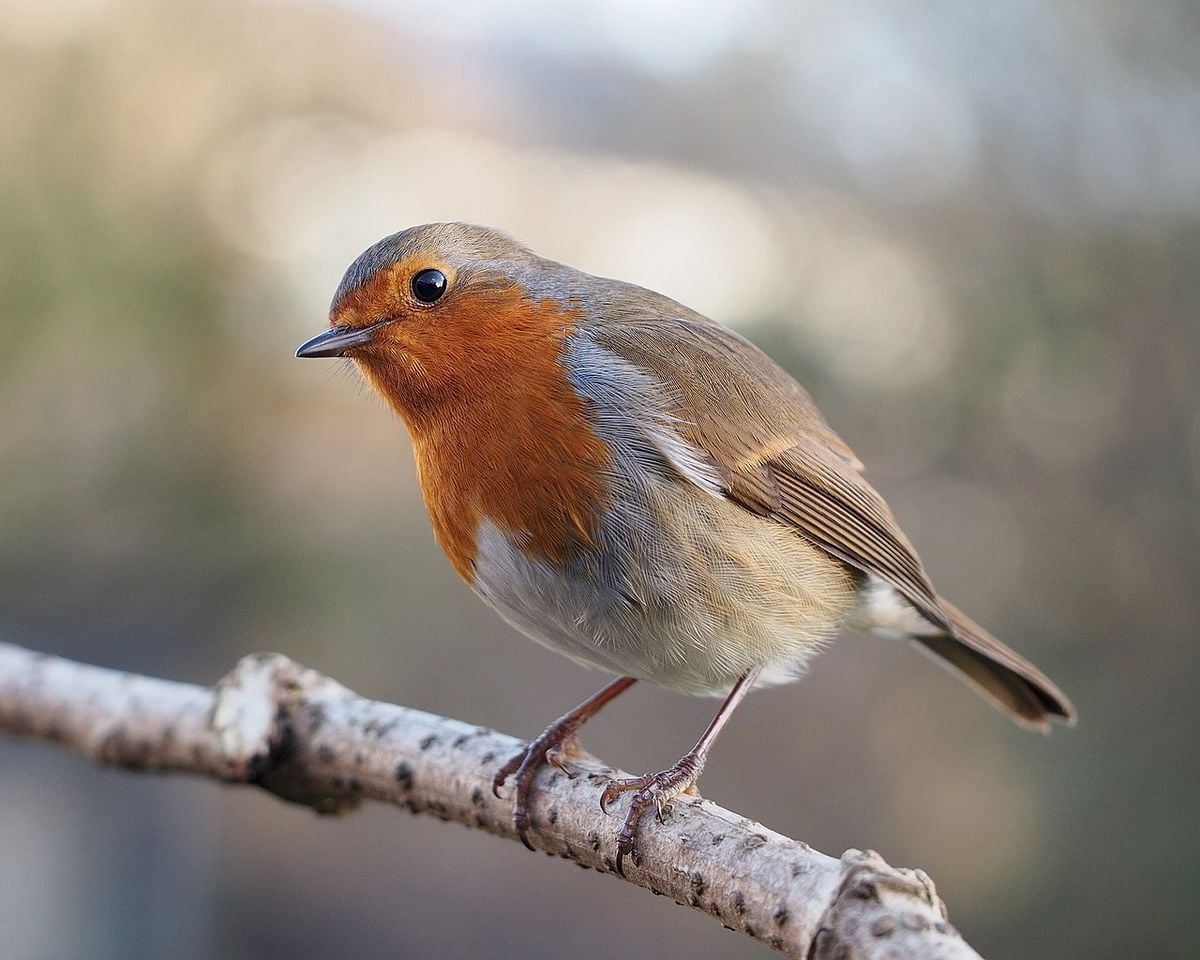
A singing European Robin. Photo via Wikimedia Commons (CC).
Songs vs. calls: what's the difference?
Birds make two broad kinds of sound, and telling them apart is the first step to bird identification by sound.
- Songs are usually longer, more musical, and more complex. They are mostly produced by males in the breeding season to defend territory and attract a mate. A robin's rich warble or a blackbird's mellow phrases are classic songs.
- Calls are shorter, simpler sounds used year-round for contact, alarm, or flight. Think of a wren's sharp tek-tek or a goldfinch's tinkling flight call.
Why it matters: a single species can have one song but many calls. When you're learning to recognise bird song, start with songs — they're more distinctive and easier to commit to memory.
What to listen for in a bird's song
Experienced birders don't memorise every song note-for-note. Instead, they listen for a handful of qualities that narrow things down fast:
- Rhythm & pace — Is it fast and bubbling, or slow and deliberate? Chaffinches end their song with a distinctive flourish; collared doves repeat a steady three-note coo.
- Pitch — High and thin (like a goldcrest) or low and fluty (like a blackbird)?
- Tone — Pure and musical, buzzy, scratchy, or mechanical?
- Repetition — Song thrushes famously repeat each phrase two to four times; that repetition is a giveaway.
- Length — A quick burst, or a long continuous ramble like a wren?
A useful trick is to describe the sound in plain words or even invent a mnemonic. Many birders learn the yellowhammer as "a little bit of bread and no cheeeese." Once you attach words to a rhythm, it sticks.
How to record a clean clip
If you want to identify bird calls by sound with an app, the quality of your recording matters more than anything else. A few seconds of clean audio beats a minute of wind noise.
- Get closer and quieter. Move toward the bird slowly and stop talking. Phone microphones pick up everything.
- Point the phone at the bird. Aim the bottom of the phone (where the mic is) toward the source.
- Capture 3–15 seconds. That's the sweet spot — long enough to catch a full phrase, short enough to avoid other birds creeping in.
- Mind the wind. Wind across the mic ruins recordings. Shelter the phone with your hand or body.
- One bird at a time. If several species are singing, wait for a gap when your target sings alone.
Let an app do the listening
Record a song and BirdNote names the species in seconds — with a confidence score.

Using a bird sound identifier app
A bird sound identifier like BirdNote takes the guesswork out of birding by ear. Under the hood it works in three steps:
- It records the song or call through your microphone.
- It builds a "fingerprint" — a spectrogram that maps the sound's pitch and timing.
- It matches that fingerprint against a reference library of thousands of species and returns the most likely candidates with a confidence percentage.
The app is fast and a brilliant teacher, but it works best as a partner, not a crutch. Use the confidence score, compare your recording against the app's reference samples, and check whether the suggested species is actually found in your area and habitat. Over time you'll start recognising songs before the app even finishes — which is exactly the goal.
The fastest way to learn birdsong is to identify a bird with an app, then listen to it again, and again, until you own it.
5 common birds to learn first
Start with loud, widespread species you'll hear almost everywhere. Master these and you'll already recognise a big share of what you hear on a typical walk.
| Bird | Sound to learn | What it sounds like |
|---|---|---|
| European Robin | Song | A wistful, rich warble — sings even in winter and at night near streetlights. |
| Common Blackbird | Song | Mellow, fluty, unhurried phrases from a high perch at dawn and dusk. |
| Wren | Song | Astonishingly loud for its size — a fast, energetic trill from a tiny bird. |
| Great Tit | Song | A repetitive, squeaky "teacher-teacher-teacher." |
| Chaffinch | Song | A short, accelerating phrase that ends in a cheerful flourish. |
Common mistakes to avoid
- Recording too far away. Faint, echoey audio is hard for any app — get closer.
- Ignoring the confidence score. A 45% match is a suggestion, not a verdict. Confirm it.
- Forgetting mimics. Starlings and some warblers imitate other birds. If something sounds "off," it might be a mimic.
- Not checking range and habitat. If the app suggests a species that doesn't occur where you are, treat it with caution.
Frequently asked questions
Can an app really identify birds by sound accurately?
Yes — with a clean recording of a single bird, modern apps are very accurate and always show a confidence score so you can judge the match yourself. Background noise and distance are the main things that reduce accuracy.
What's the best length for a recording?
Aim for 3–15 seconds of the bird singing or calling on its own. That's enough for the app to capture a full phrase without other species interfering.
Do I need internet to identify a bird by sound?
For the most accurate, up-to-date matching against the full species library, an internet connection helps. You can still browse birds you've already saved offline.
Identify your first bird today
BirdNote is free on iPhone & iPad — identify birds by song, call, or photo.