BirdNote
Hawk identification: how to identify hawks
A raptor circling overhead is one of birding's biggest thrills — and one of its trickiest IDs. Hawk identification comes down to a handful of clues: size, silhouette, how it flies, and the pattern on its tail and underwings. This guide walks you through all of them.
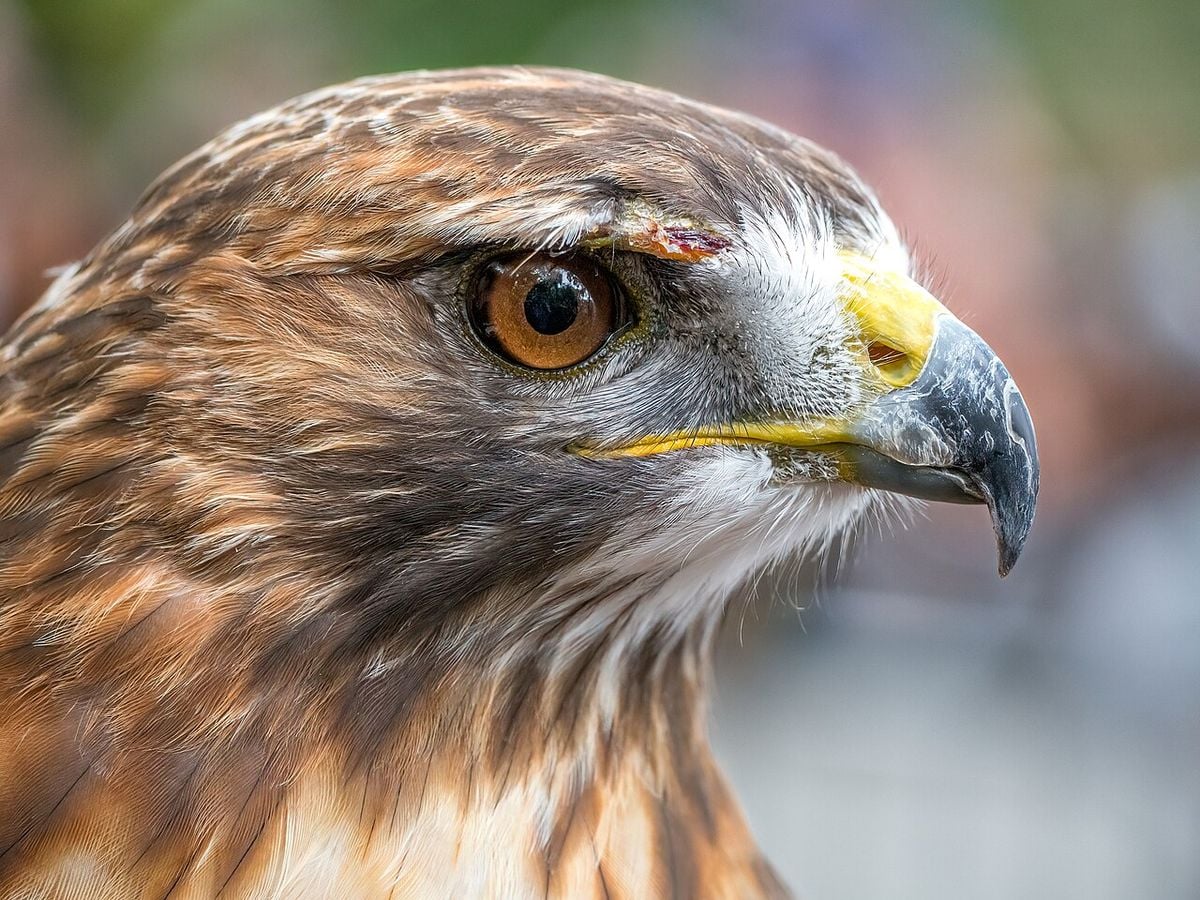
A Red-tailed Hawk, North America's most widespread hawk. Photo via Wikimedia Commons (CC).
The two main groups of hawks
Before naming a species, place the bird in the right group — it instantly narrows the field.
- Buteos (soaring hawks) — bulky bodies, broad rounded wings, and short fanned tails. They soar in wide circles over open country. The Red-tailed Hawk is the classic example.
- Accipiters (forest hawks) — slimmer, with short rounded wings and long tails built for fast, agile flight through trees. They fly with a distinctive "flap-flap-glide." Cooper's Hawk and Sharp-shinned Hawk are the textbook accipiters.
5 clues to identify a hawk
- Size & shape. Compare it to a crow or a goose. Note wing width and tail length — the proportions matter more than exact size, which is hard to judge in the sky.
- Flight style. Steady soaring, hovering, or flap-flap-glide? Each group flies differently.
- Tail. The single most useful feature. Look for colour (the red-tail's rusty upperside), banding, and shape (square, rounded, or notched).
- Underwing & belly pattern. A dark "belly band," patagial marks on the leading edge of the wing, or barring all help.
- Habitat & behaviour. Perched on a roadside pole, soaring over a ridge, or hunting a garden feeder? Context narrows it fast.
Saw the hawk clearly?
Snap a photo and let BirdNote suggest the species and show similar raptors to compare.

Common hawks and how to tell them apart
| Hawk | Group | Best ID clue |
|---|---|---|
| Red-tailed Hawk | Buteo | Rusty-red tail; dark belly band; broad wings; often on roadside poles. |
| Red-shouldered Hawk | Buteo | Strongly banded black-and-white tail; rufous shoulders; loud "kee-aah" call. |
| Cooper's Hawk | Accipiter | Long rounded tail, larger head; common at bird feeders hunting songbirds. |
| Sharp-shinned Hawk | Accipiter | Like a small Cooper's; squarer tail tip, tiny head; rapid wingbeats. |
| Swainson's Hawk | Buteo | Long pointed wings; dark flight feathers contrasting pale wing linings. |
| Northern Harrier | (Harrier) | White rump patch; flies low with wings in a shallow "V" over fields. |
Hawk, falcon, eagle or vulture?
Plenty of raptors get mistaken for hawks. Here's how to separate them at a glance:
- Falcons have long, pointed wings and fly with fast, powerful wingbeats — built for speed, not soaring. Think Kestrel or Peregrine.
- Eagles are much larger with very long, plank-like wings and a slower, heavier flight.
- Vultures soar with wings raised in a shallow "V" (a dihedral) and rock side to side; they rarely flap. The tiny head is a giveaway.
If a soaring raptor holds its wings in a strong "V" and teeters in the wind, it's almost certainly a vulture, not a hawk.
A note on hawk feathers
Found a large, stiff feather with bold dark barring? It may be from a hawk. Hawk flight feathers are broad and strongly barred in browns and creams. Note that in many countries it is illegal to collect feathers from birds of prey — enjoy and photograph them where they lie. For a full walk-through, see our feather identification guide.
Frequently asked questions
What is the most common hawk?
In North America, the Red-tailed Hawk is the most widespread and frequently seen — often perched on roadside poles or soaring over open ground. Its rusty-red tail is the clinching feature on adults.
How do I tell a hawk from a falcon?
Wing shape is the fastest clue: hawks have broader, more rounded wings, while falcons have long, swept-back pointed wings and fly with rapid, powerful beats.
Can an app identify a hawk from a photo?
Yes. If you get a clear photo, BirdNote can suggest the species and show similar raptors so you can compare tail and wing patterns side by side.
Identify the next raptor you spot
BirdNote identifies birds by photo and song — free on iPhone & iPad.