BirdNote
Bird egg identification: how to identify bird eggs
Found a small egg in the garden, or peeked into a nest? Bird egg identification relies on four things: size, colour, markings, and the nest it sits in. With those clues you can usually narrow an egg down to a likely species — without ever disturbing it.
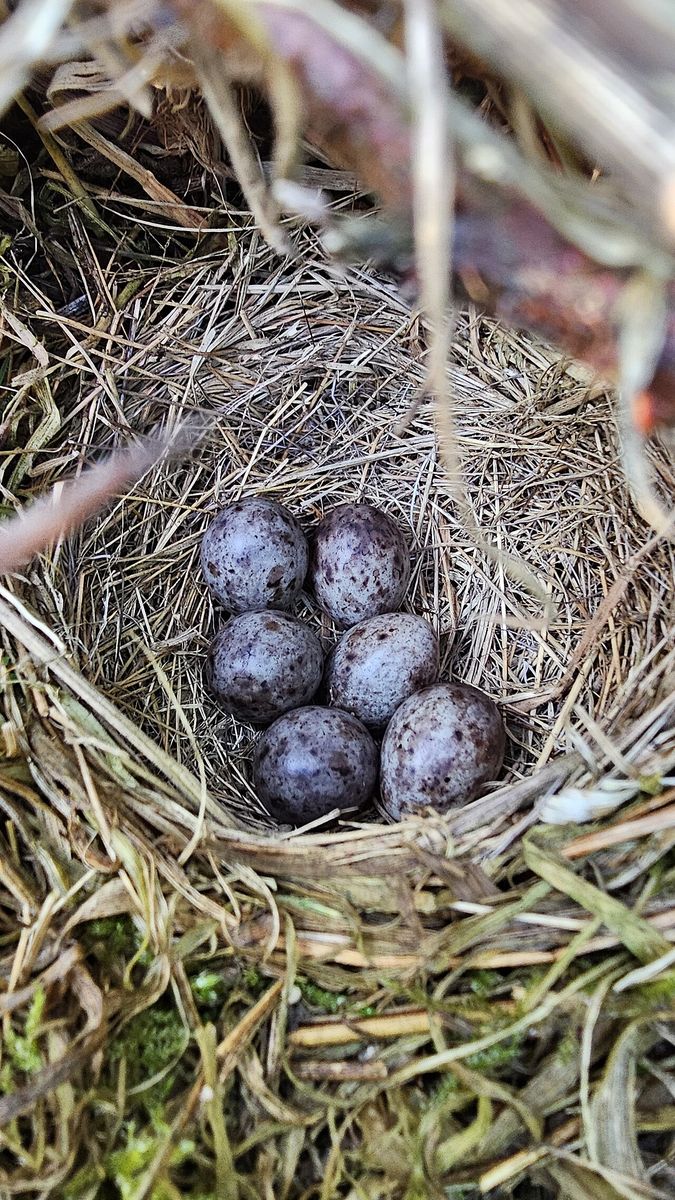
A clutch of eggs in a nest. Photo via Wikimedia Commons (CC).
The 4 clues to identify an egg
- Size. Compare to everyday objects — a wren's egg is pea-sized, a robin's is grape-sized, a duck's is hen-sized. Size alone rules out most species.
- Base colour. White, cream, blue, green, buff, or olive?
- Markings. Plain, finely speckled, blotched, scrawled, or capped with colour at the wide end?
- Context. The nest type, location, and which adult birds are nearby are huge clues — often more reliable than the egg itself.
See the parent bird nearby?
Identify the adult by photo or song with BirdNote — the fastest way to confirm whose eggs they are.

What egg colour tells you
Egg colour isn't random — it carries clues about where a bird nests:
- White or pale eggs are common in birds that nest in cavities or holes (like woodpeckers and owls), where camouflage isn't needed.
- Blue and green eggs (think robins and dunnocks) often belong to open-cup nesters; pigments help shield the embryo and may signal egg quality.
- Speckled and blotched eggs usually belong to ground or open nesters, where camouflage protects the clutch from predators.
Common eggs and their birds
| Egg looks like… | Likely bird |
|---|---|
| Sky-blue, unmarked, grape-sized | American Robin / Dunnock (UK) |
| Pale blue-green with fine reddish speckles | European Robin / House Finch |
| White to pale, heavily speckled, small | House Sparrow |
| Glossy pale blue, larger | Blackbird / Starling |
| Cream with dark blotches, ground nest | Lapwing / plover (waders) |
| Large, plain pale, in down-lined nest | Mallard or other duck |
Egg colour varies even within a species, so always combine colour with size and nest type rather than relying on any single clue.
Read the nest, not just the egg
The nest is often the best evidence. A neat moss cup low in a hedge, a mud-lined cup on a ledge, a hole in a tree, a scrape on the ground, or a domed nest with a side entrance each point to different families. Note the materials, the location, and the height — then match the adult bird you see attending it.
What to do if you find a nest
- Keep your distance. Lingering can draw predators or cause parents to abandon the nest.
- Don't touch or move anything. It's illegal for most species and harmful.
- Identify from afar. Use binoculars or a zoom photo, and identify the attending adult with an app.
- Report rare finds to a local wildlife or ornithology group rather than sharing exact locations publicly.
Frequently asked questions
What bird lays small blue eggs?
Plain sky-blue eggs are famously laid by the American Robin; in the UK, the Dunnock lays similar bright blue eggs. Blackbirds and Starlings lay larger blue-green eggs, usually with some markings.
Is it illegal to pick up a bird egg?
In most countries, yes — collecting or disturbing wild bird eggs is illegal. Always leave eggs where they are and identify them from photos.
Can I identify an egg with an app?
Egg-only identification is unreliable because many eggs look alike. The best method is to identify the adult bird attending the nest — which BirdNote does quickly by photo or song.
Confirm the bird behind the eggs
Identify the parent bird by song or photo — free with BirdNote.