BirdNote
Duck identification: how to identify ducks and ducklings
Ducks are some of the most accessible birds to watch — and surprisingly varied once you look closely. Good duck identification comes down to a few habits: noticing how the duck feeds, its size and shape, and the key colours and patches. This guide covers ducks and ducklings alike.
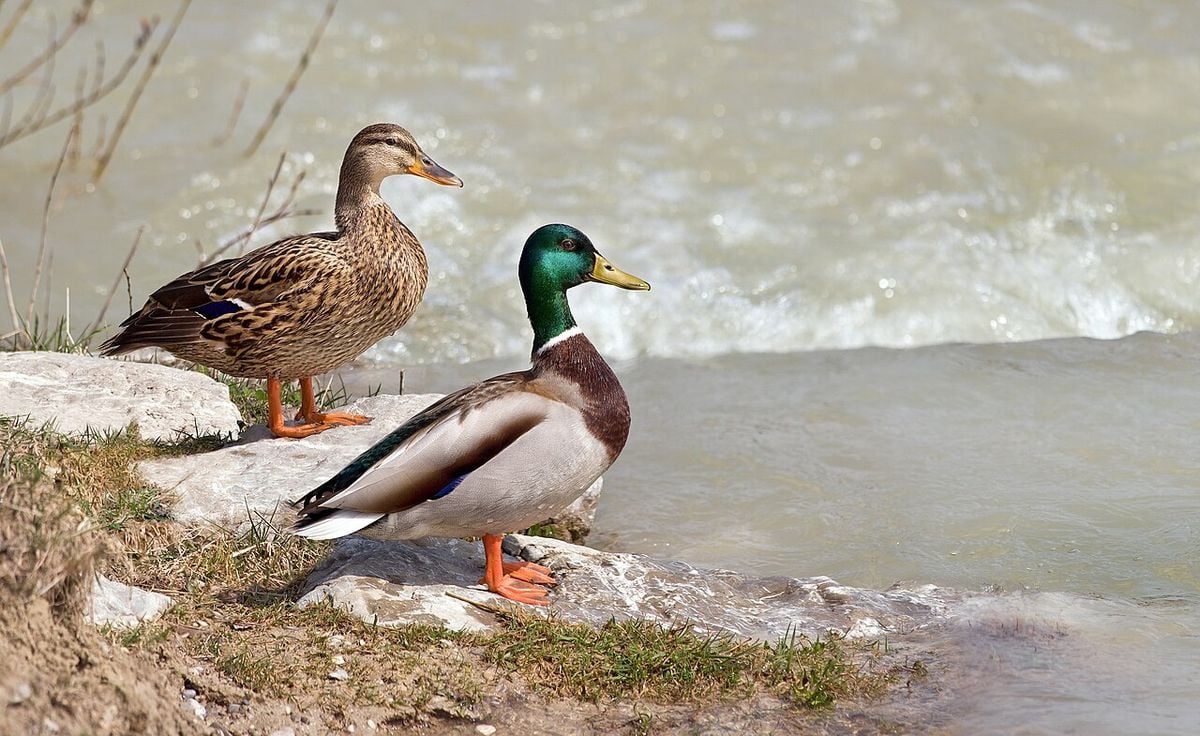
Mallards, the most familiar duck across the Northern Hemisphere. Photo via Wikimedia Commons (CC).
Dabblers vs. divers
The first split in identifying ducks is how they feed:
- Dabbling ducks feed at the surface or "up-end" (tail in the air, head underwater). They spring straight up into flight. Mallards, Teal, Wigeon, and Pintail are dabblers.
- Diving ducks dive fully underwater for food and patter across the surface to take off. Pochard, Tufted Duck, Goldeneye, and scaup are divers.
What to look at first
- Head colour & shape. The male Mallard's glossy green head, the Wigeon's chestnut head with a cream stripe — heads are often the quickest clue.
- Bill colour and shape. The Shoveler's huge spatula bill is unmistakable.
- Body markings. Flank colour, breast colour, and any bold patches.
- The speculum. The iridescent wing patch (blue-purple in a Mallard) is great for trickier IDs and even for identifying feathers.
Not sure which duck it is?
Snap a photo and BirdNote suggests the species and shows similar ducks to compare.

Identifying female ducks
Female ducks are the classic ID headache — most are mottled brown for camouflage on the nest. Tricks that help:
- Check the speculum. Wing-patch colour is often the same in both sexes, so a female Mallard still shows the blue speculum.
- Note bill colour. A female Mallard has an orange-and-brown bill; a female Gadwall has a neat orange-edged bill.
- Look at who she's with. Females often pair or flock with identifiable males, especially in winter.
Common ducks at a glance
| Duck | Group | Standout feature (male) |
|---|---|---|
| Mallard | Dabbler | Glossy green head, yellow bill, blue speculum. |
| Wigeon | Dabbler | Chestnut head with a creamy-yellow forehead stripe. |
| Teal | Dabbler | Small; chestnut head with a green eye-patch. |
| Northern Shoveler | Dabbler | Huge spatula-shaped bill; green head, white breast. |
| Tufted Duck | Diver | Black-and-white body with a drooping head tuft. |
| Wood Duck / Mandarin | Dabbler | Ornate, multi-coloured "painted" plumage. |
How to identify ducklings
Ducklings are harder because their adult markings haven't appeared yet, but you can still narrow them down:
- Identify the mother. Ducklings stay close to the female — identify her and you've identified them. This is the single most reliable method.
- Look at the face pattern. Mallard ducklings have a dark eye-stripe on a yellow face; the pattern of stripes and spots differs by species.
- Note the habitat. A river, a town pond, or a reedy marsh each host different breeding ducks.
If you find ducklings, keep your distance and never separate them from the adult. Identify by watching, not approaching.
Frequently asked questions
What is the most common duck?
The Mallard is by far the most widespread and familiar duck across North America, Europe and Asia. The male's green head and the species' blue wing speculum are the easiest features to learn first.
How do I identify a female duck?
Use the wing speculum (often the same colour as the male's), the bill colour and pattern, body size, and any males she's associating with. These beat the brown body plumage, which looks similar across species.
Can an app identify a duck from a photo?
Yes. A clear photo lets BirdNote suggest the species and show similar ducks so you can compare head, bill and speculum side by side.
Identify ducks on your next pond walk
BirdNote identifies birds by photo and song — free on iPhone & iPad.